
Before You Sell: 5 Steps to Prepare Your Commercial Property for a 1031 Exchange

Before You Sell: Five Steps to Prepare Your Commercial Property for a 1031 Exchange.

In the world of commercial real estate, a Section 1031 exchange is one of the most powerful wealth-building tools available. By allowing you to defer capital gains taxes, it enables you to roll 100% of your proceeds from a sale into a new, “like-kind” investment. This strategy can dramatically accelerate your portfolio’s growth, preserve capital, and help you pivot into new asset classes or markets.

However, the power of a 1031 exchange is matched by its rigid complexity. The infamous “ticking clock”—45 days to identify a replacement property and 180 days to close—is a trap for the unprepared.

Success isn’t found in the scramble after you sell. It’s secured in the months before your property ever hits the market.

As seasoned advisors in the commercial investment space, we’ve guided countless clients through this process. The difference between a smooth, successful exchange and a failed, costly one almost always comes down to pre-sale preparation.

Here are the five essential steps every investor must take before selling to ensure a successful 1031 exchange.

1. Assemble Your "Exchange Team"

The single biggest mistake an investor can make is trying to navigate a 1031 exchange alone—or assembling their team after the sale. This is not a DIY project. The IRS rules are strict and unforgiving.

Your team should be in place before you list your property:

  • Qualified Intermediary (QI): This is the most critical member. A QI (also called an Accommodator) is a required, independent third party who facilitates the exchange. They will hold your sale proceeds in escrow to ensure you never have “constructive receipt” of the funds, which would void the exchange. Crucial: Your QI cannot be your agent, attorney, broker, or CPA. Interview and select your QI early.
  • CPA / Tax Advisor: Your CPA must run the numbers. They will calculate your exact capital gains tax liability, establish your “target” replacement value (see Step 2), and advise on the tax implications of “boot.”
  • Real Estate Attorney: You need legal counsel familiar with 1031 exchange contract language. Your attorney will review both your sale and purchase contracts to ensure they contain the necessary clauses and contingencies.
  • Commercial Broker: Your broker should be more than a sales agent; they must be an exchange advisor. They need to understand your goals for both the disposition (your sale) and the acquisition (your replacement) and how they function together.

2. Analyze Your Relinquished Property Numbers

To know what you need to buy, you must first know exactly what you are selling. A “back-of-the-napkin” number isn’t good enough. Sit down with your CPA and broker to define the precise financial targets.

To defer 100% of your capital gains tax, you must follow two primary rules

  1. Reinvest All Net Proceeds: The total purchase price of your replacement property (or properties) must be equal to or greater than the net sales price of your relinquished property.
  2. Acquire Equal or Greater Debt: You must acquire new debt that is equal to or greater than the debt you paid off on the property you sold. If you don’t, the difference (called “mortgage boot”) is generally taxable. You can, however, offset this by adding more of your own cash to the purchase.

Your “target” is the total value you must acquire. This analysis will tell you the exact amount of equity and debt you need to replace, forming the foundation of your replacement search.

3. Define Your "Replacement Property" Strategy

The term “like-kind” is surprisingly broad. You can exchange a warehouse for an apartment building, raw land for a retail center, or an office building for a portfolio of NNN (Triple Net) properties.

The question isn’t just “What can I buy?” The question is “What should I buy?”

This is your chance to strategically reposition your portfolio. Before you sell, answer these questions:

  • Investment Goals: Are you moving from a management-intensive asset (like multifamily) to a passive one (like a NNN lease)? Are you seeking higher cash flow or long-term appreciation?
  • Asset Class: Do you want to stay in your current sector (e.g., industrial) or pivot to a new one (e.g., medical office)?
  • Market: Is this an opportunity to exit a saturated market and enter a high-growth emerging market?
  • Risk Tolerance: Are you willing to take on a value-add project, or do you need a stabilized, turn-key property?

Defining this criteria now prevents you from making a panicked, sub-par investment just to beat the 45-day clock.

4. Start Your "Reverse" Search Immediately

This is the most practical advice we can give: Do not wait for your property to close to start looking for a replacement. The 45-day identification window is for formally identifying, not finding.

Start your search today.

A prepared investor will have a “shortlist” of potential replacement properties, markets, and contacts before their relinquished property is even under contract.

This “reverse hunt” gives you leverage. You can begin underwriting deals, talking to brokers in your target markets, and even lining up financing. In a competitive market, being able to show a seller that you are a serious, pre-qualified 1031 buyer with an exchange in process makes your offer significantly stronger.

5. Master the Strict Identification & Timing Rules

Finally, you must understand the inflexible rules of the game. Your QI will be your guide, but you are the player.

  • The 45-Day Identification Period: This period begins the moment your relinquished property sale closes. It is 45 calendar days, no exceptions. You must deliver a formal, written identification of your potential replacement properties to your QI by midnight on the 45th day.
  • The 180-Day Closing Period: You must close on one or more of your identified properties within 180 calendar days of your original sale (or your tax return due date, whichever is earlier).

Within the 45-day window, you must adhere to one of these three identification rules:

  1. The 3-Property Rule: (Most common) You can identify up to three properties of any value.
  2. The 200% Rule: You can identify any number of properties, as long as their total fair market value does not exceed 200% of your relinquished property’s sale price.
  3. The 95% Rule: You can identify any number of properties, but you must ultimately acquire at least 95% of the total value you identified. (This is rare and used in specific situations).

Understanding these rules allows you to build a realistic and compliant identification list, setting you up for a smooth closing.

The Takeaway: Preparation is Everything

A 1031 exchange is a strategic process, not a last-minute transaction. By treating it as such, you transform a complex tax code into a powerful engine for building generational wealth. The work you do in the 90 days before you list is what guarantees your success in the 180 days that follow.

Are you considering selling a commercial property and want to explore a 1031 exchange?
A successful exchange starts with a clear strategy. Contact us for a no-obligation consultation to analyze your current property and discuss how a 1031 exchange can help you achieve your long-term investment goals.

Author

Share:

More Posts

en_USEnglish
Scroll to Top
LIons Financial

Ariel Tavor

Principal

Ariel Tavor is the Founder and Principal Managing Director of Lions Financial. His agenda for Lions Financial is to provide his clients a service that maintains the highest professional value. Specializing in the Business-to-Business market has allowed proficient expertise in providing ongoing consulting services in the focus areas of business advisory, capital markets, and risk management. Ariel works with CEO’s, Capital Investment funds, and Boards of Directors where he advises his clients in matters of Executive compensation, Business Plan Design, Mergers & Acquisitions, Due Diligence, and Asset Financing.

Ariel has 10 years of experience in the financial services industry. He has worked in insurance and investment companies to analyze client’s financial and make suggestions on allocations based on defined objectives as well as maintaining long term relationships. Ariel’s comprehensive experience has allowed him to work closely with CEOs of companies and their executive teams from diverse industries such as trucking, hospitality, commercial real estate, Insurance, manufacturing, and technology. He has helped lead companies through the challenging decisions around – Buy-Sell Agreements, Deferred Compensation, Employee Group Benefits, Succession Planning, Mergers and Acquisitions, Valuations, and Business Sales.

Ariel currently oversees their family office investment group and sits on the Board of Directors of several companies and real estate developments. Their Investment group controls a portfolio of companies in multiple industries. They collaboratively have holdings in companies specialized in – Automotive Distribution- Real Estate Asset Management- Corporate Travel- Ink Mailing Manufacturing, E-Commerce, Financial Services, Management Consulting, Enterprise Technology, and Food Concepts. In recent years there has been a transition into fund allocation towards limited partnership investments in Venture Capital, Private Equity, and REITS within individual underwriting opportunities.

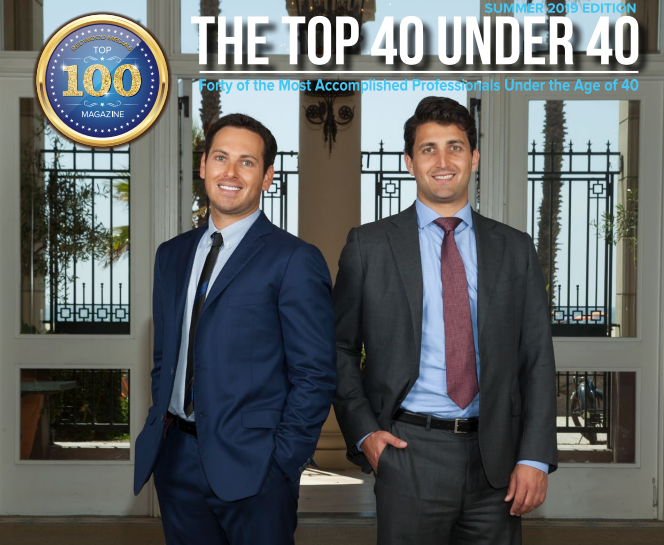
TOP 40 UNDER 40

Leadership Recognition

Ariel Tavor is the founder and principal managing director of Lions Assurance Financial. His agenda for Lions Assurance Financial is to provide his clients a service that maintains the highest professional value. Specializing in the business-to-business market has allowed proficient expertise in providing ongoing consulting services in the focus areas of business advisory, capital markets, and risk management.

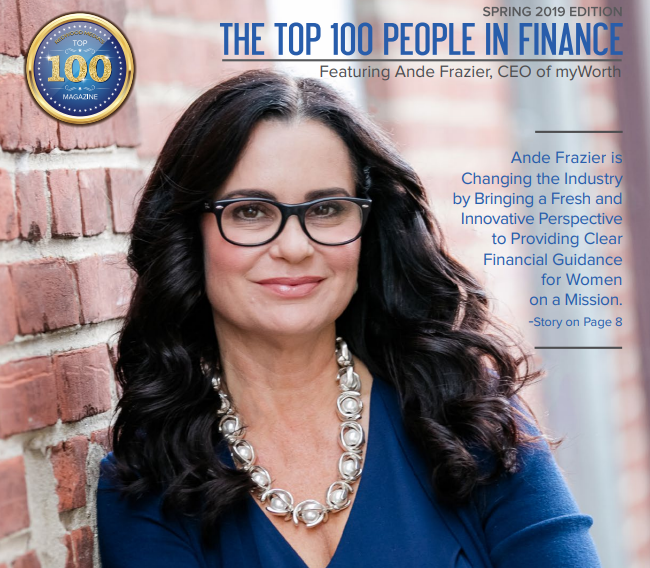
TOP 100 PEOPLE IN FINANCE

Industry Recognition

Lions Assurance Financial is a highly successful, independent business consulting and wealth management advisory firm that focuses on three key areas of the financial industry: business advisory, capital markets, and risk management. The experienced team at Lions Assurance Financial focuses on serving the business and wealth management needs of privately owned business generating 3-50 million in revenue including independent business owners, family owned businesses, and business partners. Lions Assurance Financial works with capital providers including investment banks, private equity firms, venture capital firms, capital advisory firms, accredited investor platforms, commercial banks, and speciality finance firms.​

Exeleon

Leadership & Business Feature

What is the fundamental difference between a buoyant company and a not-so-good one, when all the factors are the same?
The reply is simple- expeditious actions. It is the outcome of the ability to form an idea about the situation, find a perfect response,
and then act accordingly. And all that, without an iota of hesitation. Companies that belong to the second group are known to lack this decisiveness, which sprouts from an absence of clarity in vision or rather the faculty of processing the steps mentioned above.​

The Silicon Review

50 Smartest Companies of the Year

An effective risk management consultant will help individuals and organizations evaluate their risks and develop a plan to counter their losses. Risk management is a complex process, and there is no one-size-fits-all process that all consultants can use. However, there are certain conventional methods that a consultant will use to help you protect your organization from risk. A risk management consultant should be capable of identifying the unique risk that your business is exposed to and carefully evaluating the scenarios. One of the most critical steps in the risk management step is to discover and list all the expected and unexpected risks. There are various advisory firms that can help you mitigate risk and take care of your business’s financial aspect, but one firm that stands out from the rest is Lions Financial. The company is an independent financial services & business advisory firm based in New York. In conversation with Ariel Tavor, Managing Director of Lions Financial. Lions Assurance Financial is a highly successful, independent business consulting and wealth management advisory firm that focuses on three key areas of the financial industry: business advisory, capital markets, and risk management. The experienced team at Lions Assurance Financial focuses on serving the business and wealth management needs of privately owned business generating 3-50 million in revenue including independent business owners, family-owned businesses and business partners. Lions Assurance Financial works with capital providers including investment banks, private equity firms, venture capital firms, capital advisory firms, accredited investor platforms, commercial banks, and specialty finance firms.