The “Slow-Burn” Balance Sheet: Strategies for Managing Margin Compression in a Higher-for-Longer Environment

Lions Financial article cover: The Slow-Burn Balance Sheet – Strategies for Managing Margin Compression in a Higher-for-Longer Environment.

In the economic landscape of 2026, the corporate “sudden death” scenarios of the early 2020s have been replaced by something far more insidious: the Slow-Burn.

We are no longer seeing a wave of spectacular liquidity collapses. Instead, thousands of mid-market companies are being systematically strangled. They have enough cash to keep the lights on, but their growth capital is being eaten alive by two relentless pincers: high debt coupons and persistent labor cost inflation.

If your interest coverage ratio is thinning and your “EBITDA-to-Cash” conversion is lagging, you aren’t facing a cliff—you’re in a slow-burn. Here is how to restructure the balance sheet before the oxygen runs out.

The "Interest Coverage" Math: From Growth to Survival

In a “Higher-for-Longer” interest rate environment, the traditional metric of success—Revenue Growth—is being superseded by Debt Service Coverage Ratio (DSCR).

Many companies are operating with legacy debt or floating-rate revolvers that have seen coupons double since 2021. When you add labor inflation (averaging 4–5% in many sectors), the math becomes punishing. A simplified look at the “Slow-Burn” pressure:

DEBT SERVICE COVERAGE RATIO
DSCR =
Net Operating Income Total Debt Service

If your DSCR is hovering near 1.1x or 1.2x, you are one bad quarter away from a technical default.
Advisory strategies in 2026 focus on moving this ratio back toward 2.0x not by increasing sales, but by aggressive liability management.

Strategy: The "Synthetic Equity" Pivot

For companies that cannot afford to take on more expensive debt, the answer often lies in Preferred Equity or Mezzanine “PIK” (Payment-in-Kind) instruments.
How it works: You replace high-interest, cash-pay debt with capital that allows you to “pay” interest by increasing the principal balance of the loan rather than parting with precious cash today.

THE GOAL

Preserving cash flow to offset labor costs while waiting for a potential rate softening or an operational turnaround.

THE TRADE-OFF

You are trading future ownership (dilution) for current survival (liquidity).

Operational De-Leveraging: Attacking the "Labor Pincer"

Margin compression in 2026 isn’t just a finance problem; it’s an HR and tech problem. As labor costs remain “sticky,” companies must find Efficiency Gains to offset the interest burden.

  • Automation CapEx: If a $2 million investment in AI-driven workflow automation reduces headcount costs by $500,000 annually, the “Internal Rate of Return” (IRR) on that project often exceeds the cost of the debt used to fund it.
  • The “Unit Economics” Audit: Advisors are increasingly recommending that companies “fire” their lowest-margin customers. In a low-interest world, “volume is vanity.” In a high-interest world, “margin is sanity.” If a client doesn’t cover their share of your increased labor and debt costs, they are an anchor, not an asset.

Restructuring the "Maturity Wall"

The most dangerous element of a slow-burn is the Maturity Wall—the date when your total debt comes due. In 2026, waiting until 12 months before maturity is a fatal mistake.

ADVISORY NOTE

Proactive companies are engaging in “Amend and Extend” (A&E) exercises two to three years in advance. Lenders are often willing to extend maturities in exchange for a modest equity kicker or tighter covenants, providing the company with the “runway” needed to outlast the current rate cycle.

Summary of Strategies

Strategy Primary Objective Target Metric
PIK Toggle Debt Preserve daily operating cash Cash Flow from Operations
Sale-Leasebacks Unlock capital from owned real estate/equipment Liquidity / Cash on Hand
Margin-Focused Divestiture Shed high-labor, low-margin business units EBITDA Margin %
A&E (Amend & Extend) Remove the threat of immediate refinancing Debt Maturity Profile

The Path Forward

The “Slow-Burn” doesn’t have to end in insolvency. It requires a psychological shift: moving away from the “growth at all costs” mindset of the last decade and toward a disciplined, cash-centric defensive posture. By the time interest rates eventually settle, the companies that survived the burn will be the leanest, most efficient players in the market.

At Lions Financial Advisory, we help companies navigate margin compression, optimize their capital structure, and preserve liquidity before financial pressure becomes a crisis.

Author

Share:

More Posts

en_USEnglish
Scroll to Top
LIons Financial

Ariel Tavor

Principal

Ariel Tavor is the Founder and Principal Managing Director of Lions Financial. His agenda for Lions Financial is to provide his clients a service that maintains the highest professional value. Specializing in the Business-to-Business market has allowed proficient expertise in providing ongoing consulting services in the focus areas of business advisory, capital markets, and risk management. Ariel works with CEO’s, Capital Investment funds, and Boards of Directors where he advises his clients in matters of Executive compensation, Business Plan Design, Mergers & Acquisitions, Due Diligence, and Asset Financing.

Ariel has 10 years of experience in the financial services industry. He has worked in insurance and investment companies to analyze client’s financial and make suggestions on allocations based on defined objectives as well as maintaining long term relationships. Ariel’s comprehensive experience has allowed him to work closely with CEOs of companies and their executive teams from diverse industries such as trucking, hospitality, commercial real estate, Insurance, manufacturing, and technology. He has helped lead companies through the challenging decisions around – Buy-Sell Agreements, Deferred Compensation, Employee Group Benefits, Succession Planning, Mergers and Acquisitions, Valuations, and Business Sales.

Ariel currently oversees their family office investment group and sits on the Board of Directors of several companies and real estate developments. Their Investment group controls a portfolio of companies in multiple industries. They collaboratively have holdings in companies specialized in – Automotive Distribution- Real Estate Asset Management- Corporate Travel- Ink Mailing Manufacturing, E-Commerce, Financial Services, Management Consulting, Enterprise Technology, and Food Concepts. In recent years there has been a transition into fund allocation towards limited partnership investments in Venture Capital, Private Equity, and REITS within individual underwriting opportunities.

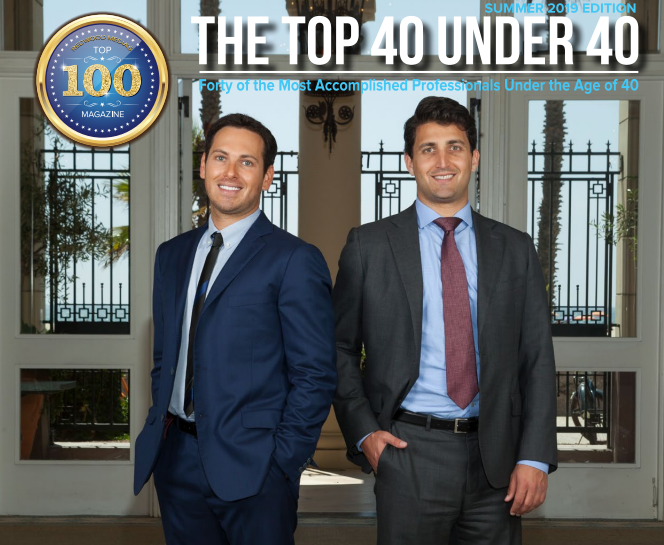
TOP 40 UNDER 40

Leadership Recognition

Ariel Tavor is the founder and principal managing director of Lions Assurance Financial. His agenda for Lions Assurance Financial is to provide his clients a service that maintains the highest professional value. Specializing in the business-to-business market has allowed proficient expertise in providing ongoing consulting services in the focus areas of business advisory, capital markets, and risk management.

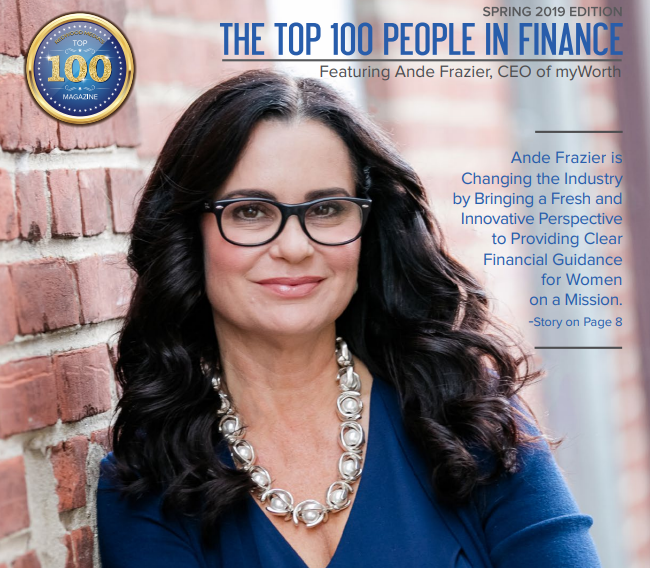
TOP 100 PEOPLE IN FINANCE

Industry Recognition

Lions Assurance Financial is a highly successful, independent business consulting and wealth management advisory firm that focuses on three key areas of the financial industry: business advisory, capital markets, and risk management. The experienced team at Lions Assurance Financial focuses on serving the business and wealth management needs of privately owned business generating 3-50 million in revenue including independent business owners, family owned businesses, and business partners. Lions Assurance Financial works with capital providers including investment banks, private equity firms, venture capital firms, capital advisory firms, accredited investor platforms, commercial banks, and speciality finance firms.​

Exeleon

Leadership & Business Feature

What is the fundamental difference between a buoyant company and a not-so-good one, when all the factors are the same?
The reply is simple- expeditious actions. It is the outcome of the ability to form an idea about the situation, find a perfect response,
and then act accordingly. And all that, without an iota of hesitation. Companies that belong to the second group are known to lack this decisiveness, which sprouts from an absence of clarity in vision or rather the faculty of processing the steps mentioned above.​

The Silicon Review

50 Smartest Companies of the Year

An effective risk management consultant will help individuals and organizations evaluate their risks and develop a plan to counter their losses. Risk management is a complex process, and there is no one-size-fits-all process that all consultants can use. However, there are certain conventional methods that a consultant will use to help you protect your organization from risk. A risk management consultant should be capable of identifying the unique risk that your business is exposed to and carefully evaluating the scenarios. One of the most critical steps in the risk management step is to discover and list all the expected and unexpected risks. There are various advisory firms that can help you mitigate risk and take care of your business’s financial aspect, but one firm that stands out from the rest is Lions Financial. The company is an independent financial services & business advisory firm based in New York. In conversation with Ariel Tavor, Managing Director of Lions Financial. Lions Assurance Financial is a highly successful, independent business consulting and wealth management advisory firm that focuses on three key areas of the financial industry: business advisory, capital markets, and risk management. The experienced team at Lions Assurance Financial focuses on serving the business and wealth management needs of privately owned business generating 3-50 million in revenue including independent business owners, family-owned businesses and business partners. Lions Assurance Financial works with capital providers including investment banks, private equity firms, venture capital firms, capital advisory firms, accredited investor platforms, commercial banks, and specialty finance firms.