从税单到新资产:精明的商业地产投资者如何利用1031条款积累财富

From Tax Bill to New Asset: How Commercial Real Estate Investors Use a 1031 Exchange to Build Wealth.

For successful commercial real estate investors, the sale of an appreciated asset presents a frustrating paradox. The reward for a profitable investment is often a staggering tax bill, with capital gains and depreciation recapture taxes slicing away 20-30% or more of your hard-earned equity. This “tax friction” is the single greatest obstacle to compounding wealth.

But savvy investors don’t just accept this as the cost of doing business. They use a powerful, strategic tool embedded in the tax code to turn that tax liability into fuel for their next acquisition.

This tool is Section 1031 of the Internal Revenue Code, commonly known as a 1031 exchange or “like-kind” exchange.

A 1031 exchange is not a tax-free loophole; it’s a tax-deferred strategy. It allows you to sell an investment property, roll the entire pre-tax proceeds into the purchase of a new “like-kind” investment property, and defer paying all capital gains and depreciation recapture taxes.

This deferral is the secret to building momentum. Instead of sending 30% of your equity to the IRS, you reinvest 100% of it. That increased purchasing power allows you to acquire larger, better-performing, or more numerous assets, dramatically accelerating the growth of your portfolio.

The Rules of the Road: 1031 Exchange Basics

To successfully execute a 1031 exchange, you must follow a set of strict rules. Failure to comply with any of them can invalidate the exchange and trigger the full tax bill.

  1. “Like-Kind” Property: This is a broad definition for real estate. You can exchange an apartment building for an office building, a retail center for raw land, or a single-family rental for an industrial warehouse. The key is that both the property you sell (the “relinquished” property) and the property you buy (the “replacement” property) must be held for investment or business use. You cannot exchange into your primary residence.
  2. Equal or Greater Value: To defer 100% of the tax, your replacement property must be of equal or greater value than the one you sold. You must also reinvest all the cash proceeds and replace the value of any debt you paid off. Any cash you receive, or any reduction in debt, is considered “boot” and is taxable.
  3. The Strict Timelines: This is where most investors fail. From the day you close on the sale of your property, you have 45个日历日 to formally identify potential replacement properties. You have a total of 180个日历日 从第0天起至 成交并收购 one or more of the properties you identified or under Internal Revenue Code (IRC) Section 1031(a)(3)(B), the 180-day exchange period ends on the due date (including extensions) of the taxpayer’s federal income tax return for the taxable year in which the relinquished property was sold
    Exception: Extensions are provided under Revenue Procedure 2018-58 and IRC Section 7508A  for specific, federally declared disaster areas.
  4. The Qualified Intermediary (QI): You cannot touch the money from your sale. Doing so creates “constructive receipt” and disqualifies the exchange. You must use a third-party professional known as a Qualified Intermediary (QI) to hold your funds in escrow between the sale and the new purchase.

Four Ways Investors Use a 1031 to Build Wealth (With Examples)

The 1031 exchange isn’t just a defensive tax move; it’s a powerful offensive tool for strategic growth. Here are the four most common wealth-building strategies.

1. The “Trade-Up”
This is the classic 1031 strategy: rolling equity from a smaller asset into a larger, higher-value one.

  • Case Study: An investor sells a single-family rental property for $500,000. After his original purchase price and depreciation, he has a $200,000 taxable gain, which would create a $50,000 tax bill. Instead, he initiates a 1031 exchange. He rolls the full $500,000 of proceeds into the acquisition of a $2 million, 10-unit apartment building. He has instantly scaled his portfolio from one door to ten and dramatically increased his potential cash flow, all while deferring $50,000 in taxes.

2. Diversification
A 1031 exchange allows you to reallocate capital without a tax penalty. You can diversify by asset class or geography.

  • Case Study: An investor owns a $3 million retail property that is 100% occupied by a single tenant, creating significant risk. She sells the property and uses a 1031 exchange to acquire two separate assets: a $1.5 million industrial warehouse in a growing logistics hub and a $1.5 million medical office building in a different state. She has now diversified her risk across two different asset classes and two geographic markets.

3. Consolidation
As a portfolio grows, managing many small properties can become inefficient. The 1031 exchange is the perfect tool to consolidate.

  • Case Study: An investor who has acquired five single-family rentals over the last decade is tired of the high-touch management. He sells all five properties (totaling $2.5 million) and uses a 1031 exchange to roll the combined proceeds into one 50-unit, professionally managed apartment complex. He has simplified his life, created economies of scale, and upgraded the quality of his asset base.

4. The “Active to Passive” Pivot
For investors nearing retirement, a 1031 exchange can be a life-changing estate planning tool. It allows you to transition from high-management assets (like apartments or office buildings) to passive-income properties.

  • Case Study: A 65-year-old couple sells their apartment building, which they have managed themselves for 30 years. They are done with tenants and toilets. They execute a 1031 exchange and reinvest the proceeds into two passive investments:
  1. A Triple-Net (NNN) Lease Property: A single-tenant building leased to a national pharmacy chain that is responsible for all taxes, insurance, and maintenance.
  2. A Delaware Statutory Trust (DST): A fractional-ownership structure that holds institutional-grade real estate managed by a professional sponsor.

The couple now receives a truly passive monthly check without any management responsibility, all while their capital continues to grow, tax-deferred.

A Trust-Builder's Guide: Critical Mistakes to Avoid

This strategy is powerful, but it is not forgiving. One small error can cost you millions. Here are the most 常见陷阱 to avoid.

  • Missing the 45-Day Deadline: This is the #1 killer of exchanges. You must have your potential replacement properties identified in writing to your QI by midnight on the 45th day. Start your search before you even list your property for sale.
  • Hiring a QI Too Late: Your Qualified Intermediary must be in place before you close on the sale of your property. If you close and the funds hit your bank account for even one second, the exchange is invalid.
  • Creating Taxable “Boot”: To fully defer taxes, you must buy a property of equal or greater value AND replace your debt. If you sell a $1M property with a $600k mortgage, your new property must cost at least $1M and you must take on at least $600k in new debt (or add $600k of new cash). Any shortfall in value or debt is taxable “boot.”
  • Failing the “Same Taxpayer” Rule: The legal entity that sells the property must be the same legal entity that buys the new one. If “My Holdings, LLC” sells, “My Holdings, LLC” must buy.
    Exceptions: Such as single-member LLCs (which are treated as disregarded entities for tax purposes) or grantor trusts/revocable living trusts—where individuals can take title in their own name or via their disregarded entity without violating the rule. 
  • Ignoring Zoning: Don’t just verify the property type—verify the zoning. You may successfully exchange your office building for a warehouse that meets the “like-kind” rule, only to find it’s not zoned for the industrial use you intended, creating a new and very expensive problem.

How to Choose Your Qualified Intermediary (QI)

Your QI is the most important member of your 1031 team. They are the guardians of your capital. Do not simply choose the cheapest option. A few hundred dollars saved is not worth risking your entire exchange.
When vetting a QI, ask these critical questions:

  1. How are my funds secured? The best QIs hold your funds in a segregated, qualified escrow account. This means your money is never co-mingled with other clients’ funds or the QI’s operating capital.
  2. What are your internal security controls? Demand dual authorization for all fund transfers. This means no single person at the QI’s firm can move your money; it should require a wire request from you and approval from a manager.
  3. What insurance do you carry? At a minimum, they should have a Fidelity Bond (protects against employee theft) and an Errors & Omissions (E&O) policy (protects against procedural mistakes).
  4. Are you a member of the Federation of Exchange Accommodators (FEA)? This is the industry’s only major trade association. Membership shows a commitment to ethics and best practices.
  5. Do you have a Certified Exchange Specialist® (CES®) on staff? This is a professional designation that requires rigorous testing and experience, demonstrating true expertise.

The 1031 exchange is the single most effective tool for CRE investors to build generational wealth. By understanding the rules, planning your strategy, and building the right team, you can defer your tax bill indefinitely and put 100% of your equity to work building your future. 

免责声明 This article is for informational purposes only and does not constitute tax or legal advice. All investors should consult with their own qualified tax, legal, and financial professionals before initiating any 1031 exchange.


Would you like to explore how a 1031 exchange could help you grow your real estate portfolio and preserve your investment capital?

作者

分享。

更多帖子

zh_CN简体中文
滚动到顶部
LIons Financial

阿里尔-塔沃尔

校长

Ariel Tavor 是 Lions Financial 的创始人兼首席常务董事。他对 Lions Financial 的规划是为客户提供保持最高专业价值的服务。他专注于企业对企业市场,因此能够在业务咨询、资本市场和风险管理等重点领域提供持续的咨询服务。Ariel 与首席执行官、资本投资基金和董事会合作,在高管薪酬、商业计划设计、兼并与收购、尽职调查和资产融资等方面为客户提供咨询服务。

阿里尔在金融服务行业拥有10年的从业经验。他曾在保险和投资公司任职,负责分析客户的财务状况,根据既定目标就资产配置提出建议,并维护长期客户关系。 凭借丰富的综合经验,阿里尔曾与来自卡车运输、酒店、商业地产、保险、制造业和科技等不同行业的公司首席执行官及其高管团队紧密合作。 他曾协助企业应对一系列具有挑战性的决策,包括:股权买卖协议、递延薪酬、员工团体福利、继任规划、并购、企业估值以及业务出售等。.

Ariel目前负责监督他们的家族办公室投资集团,并担任多家公司和房地产开发项目的董事会成员。他们的投资集团控制着多个行业的公司的投资组合。他们合作持有以下专业公司的股份--汽车分销--房地产资产管理--企业旅游--油墨邮寄制造,电子商务,金融服务,管理咨询,企业技术和食品概念。近年来,在个人承销的机会中,资金分配已经过渡到风险投资、私募股权和房地产投资的有限合伙投资。

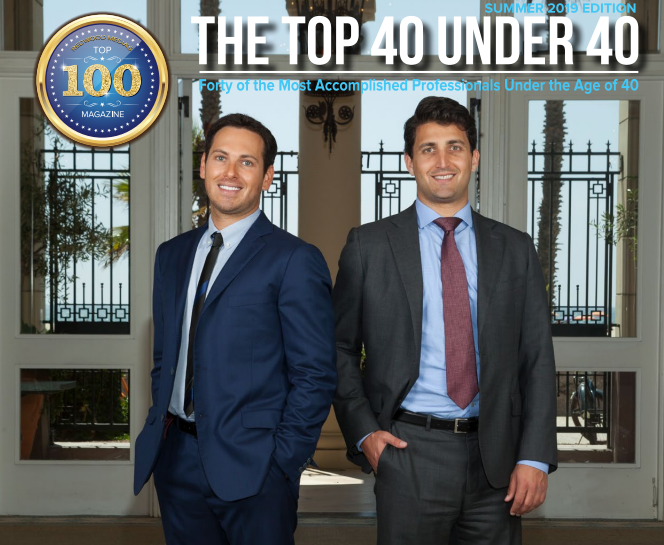
“40岁以下40强”

领导力表彰

Ariel Tavor是Lions Assurance Financial的创始人和主要总经理。他在Lions Assurance Financial的议程是为他的客户提供保持最高专业价值的服务。专注于企业对企业的市场,使得他在商业咨询、资本市场和风险管理等重点领域提供持续的咨询服务方面拥有熟练的专业知识。

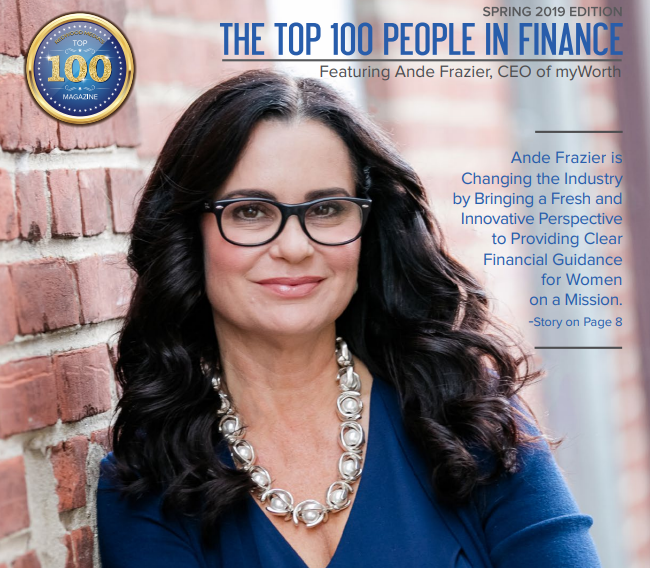
金融界百大人物

业界认可

Lions Assurance Financial 是一家非常成功的独立商业咨询和财富管理顾问公司,专注于金融业的三个关键领域:商业咨询、资本市场和风险管理。Lions Assurance Financial 的团队经验丰富,专注于满足收入在 300 万至 5000 万之间的私营企业(包括独立企业主、家族企业和业务合作伙伴)的业务和财富管理需求。Lions Assurance Financial 与资本提供商合作,包括投资银行、私募股权公司、风险投资公司、资本咨询公司、认可投资者平台、商业银行和专业金融公司。

Exeleon

领导力与商业专题

在所有因素都相同的情况下,一个有活力的公司和一个不那么好的公司之间有什么根本区别?
答案很简单--迅速的行动。它是对情况形成想法的能力的结果,找到一个完美的反应。
然后采取相应行动。所有这一切,没有丝毫犹豫。众所周知,属于第二类的公司缺乏这种果断性,原因在于缺乏清晰的愿景,或者说缺乏处理上述步骤的能力。

硅评论

年度50家最具智慧的企业

有效的风险管理顾问会帮助个人和组织评估其风险,并制定应对损失的计划。风险管理是一个复杂的过程,没有一个放之四海而皆准的过程可供所有顾问使用。不过,顾问会使用某些常规方法来帮助您保护组织免受风险。风险管理顾问应该有能力识别贵企业面临的独特风险,并仔细评估各种情况。风险管理步骤中最关键的一步是发现并列出所有预期和意外风险。有各种咨询公司可以帮助您降低风险并照顾到企业的财务方面,但有一家公司在众多公司中脱颖而出,它就是 Lions Financial。该公司是一家位于纽约的独立金融服务和商业咨询公司。与狮子会金融公司常务董事 Ariel Tavor 的对话。Lions Assurance Financial 是一家非常成功的独立商业咨询和财富管理顾问公司,专注于金融业的三个关键领域:商业咨询、资本市场和风险管理。Lions Assurance Financial 的团队经验丰富,专注于满足收入在 300 万至 5000 万之间的私营企业(包括独立企业主、家族企业和业务合作伙伴)的业务和财富管理需求。Lions Assurance Financial 与资本提供商合作,包括投资银行、私募股权公司、风险投资公司、资本咨询公司、认可投资者平台、商业银行和专业金融公司。