From Tax Bill to New Asset: How Smart CRE Investors Use a 1031 to Build Wealth

From Tax Bill to New Asset: How Commercial Real Estate Investors Use a 1031 Exchange to Build Wealth.

For successful commercial real estate investors, the sale of an appreciated asset presents a frustrating paradox. The reward for a profitable investment is often a staggering tax bill, with capital gains and depreciation recapture taxes slicing away 20-30% or more of your hard-earned equity. This “tax friction” is the single greatest obstacle to compounding wealth.

But savvy investors don’t just accept this as the cost of doing business. They use a powerful, strategic tool embedded in the tax code to turn that tax liability into fuel for their next acquisition.

This tool is Section 1031 of the Internal Revenue Code, commonly known as a 1031 exchange or “like-kind” exchange.

A 1031 exchange is not a tax-free loophole; it’s a tax-deferred strategy. It allows you to sell an investment property, roll the entire pre-tax proceeds into the purchase of a new “like-kind” investment property, and defer paying all capital gains and depreciation recapture taxes.

This deferral is the secret to building momentum. Instead of sending 30% of your equity to the IRS, you reinvest 100% of it. That increased purchasing power allows you to acquire larger, better-performing, or more numerous assets, dramatically accelerating the growth of your portfolio.

The Rules of the Road: 1031 Exchange Basics

To successfully execute a 1031 exchange, you must follow a set of strict rules. Failure to comply with any of them can invalidate the exchange and trigger the full tax bill.

  1. “Like-Kind” Property: This is a broad definition for real estate. You can exchange an apartment building for an office building, a retail center for raw land, or a single-family rental for an industrial warehouse. The key is that both the property you sell (the “relinquished” property) and the property you buy (the “replacement” property) must be held for investment or business use. You cannot exchange into your primary residence.
  2. Equal or Greater Value: To defer 100% of the tax, your replacement property must be of equal or greater value than the one you sold. You must also reinvest all the cash proceeds and replace the value of any debt you paid off. Any cash you receive, or any reduction in debt, is considered “boot” and is taxable.
  3. The Strict Timelines: This is where most investors fail. From the day you close on the sale of your property, you have 45 calendar days to formally identify potential replacement properties. You have a total of 180 calendar days from Day 0 to close and acquire one or more of the properties you identified or under Internal Revenue Code (IRC) Section 1031(a)(3)(B), the 180-day exchange period ends on the due date (including extensions) of the taxpayer’s federal income tax return for the taxable year in which the relinquished property was sold
    Exception: Extensions are provided under Revenue Procedure 2018-58 and IRC Section 7508A  for specific, federally declared disaster areas.
  4. The Qualified Intermediary (QI): You cannot touch the money from your sale. Doing so creates “constructive receipt” and disqualifies the exchange. You must use a third-party professional known as a Qualified Intermediary (QI) to hold your funds in escrow between the sale and the new purchase.

Four Ways Investors Use a 1031 to Build Wealth (With Examples)

The 1031 exchange isn’t just a defensive tax move; it’s a powerful offensive tool for strategic growth. Here are the four most common wealth-building strategies.

1. The “Trade-Up”
This is the classic 1031 strategy: rolling equity from a smaller asset into a larger, higher-value one.

  • Case Study: An investor sells a single-family rental property for $500,000. After his original purchase price and depreciation, he has a $200,000 taxable gain, which would create a $50,000 tax bill. Instead, he initiates a 1031 exchange. He rolls the full $500,000 of proceeds into the acquisition of a $2 million, 10-unit apartment building. He has instantly scaled his portfolio from one door to ten and dramatically increased his potential cash flow, all while deferring $50,000 in taxes.

2. Diversification
A 1031 exchange allows you to reallocate capital without a tax penalty. You can diversify by asset class or geography.

  • Case Study: An investor owns a $3 million retail property that is 100% occupied by a single tenant, creating significant risk. She sells the property and uses a 1031 exchange to acquire two separate assets: a $1.5 million industrial warehouse in a growing logistics hub and a $1.5 million medical office building in a different state. She has now diversified her risk across two different asset classes and two geographic markets.

3. Consolidation
As a portfolio grows, managing many small properties can become inefficient. The 1031 exchange is the perfect tool to consolidate.

  • Case Study: An investor who has acquired five single-family rentals over the last decade is tired of the high-touch management. He sells all five properties (totaling $2.5 million) and uses a 1031 exchange to roll the combined proceeds into one 50-unit, professionally managed apartment complex. He has simplified his life, created economies of scale, and upgraded the quality of his asset base.

4. The “Active to Passive” Pivot
For investors nearing retirement, a 1031 exchange can be a life-changing estate planning tool. It allows you to transition from high-management assets (like apartments or office buildings) to passive-income properties.

  • Case Study: A 65-year-old couple sells their apartment building, which they have managed themselves for 30 years. They are done with tenants and toilets. They execute a 1031 exchange and reinvest the proceeds into two passive investments:
  1. A Triple-Net (NNN) Lease Property: A single-tenant building leased to a national pharmacy chain that is responsible for all taxes, insurance, and maintenance.
  2. A Delaware Statutory Trust (DST): A fractional-ownership structure that holds institutional-grade real estate managed by a professional sponsor.

The couple now receives a truly passive monthly check without any management responsibility, all while their capital continues to grow, tax-deferred.

A Trust-Builder's Guide: Critical Mistakes to Avoid

This strategy is powerful, but it is not forgiving. One small error can cost you millions. Here are the most common pitfalls to avoid.

  • Missing the 45-Day Deadline: This is the #1 killer of exchanges. You must have your potential replacement properties identified in writing to your QI by midnight on the 45th day. Start your search before you even list your property for sale.
  • Hiring a QI Too Late: Your Qualified Intermediary must be in place before you close on the sale of your property. If you close and the funds hit your bank account for even one second, the exchange is invalid.
  • Creating Taxable “Boot”: To fully defer taxes, you must buy a property of equal or greater value AND replace your debt. If you sell a $1M property with a $600k mortgage, your new property must cost at least $1M and you must take on at least $600k in new debt (or add $600k of new cash). Any shortfall in value or debt is taxable “boot.”
  • Failing the “Same Taxpayer” Rule: The legal entity that sells the property must be the same legal entity that buys the new one. If “My Holdings, LLC” sells, “My Holdings, LLC” must buy.
    Exceptions: Such as single-member LLCs (which are treated as disregarded entities for tax purposes) or grantor trusts/revocable living trusts—where individuals can take title in their own name or via their disregarded entity without violating the rule. 
  • Ignoring Zoning: Don’t just verify the property type—verify the zoning. You may successfully exchange your office building for a warehouse that meets the “like-kind” rule, only to find it’s not zoned for the industrial use you intended, creating a new and very expensive problem.

How to Choose Your Qualified Intermediary (QI)

Your QI is the most important member of your 1031 team. They are the guardians of your capital. Do not simply choose the cheapest option. A few hundred dollars saved is not worth risking your entire exchange.
When vetting a QI, ask these critical questions:

  1. How are my funds secured? The best QIs hold your funds in a segregated, qualified escrow account. This means your money is never co-mingled with other clients’ funds or the QI’s operating capital.
  2. What are your internal security controls? Demand dual authorization for all fund transfers. This means no single person at the QI’s firm can move your money; it should require a wire request from you and approval from a manager.
  3. What insurance do you carry? At a minimum, they should have a Fidelity Bond (protects against employee theft) and an Errors & Omissions (E&O) policy (protects against procedural mistakes).
  4. Are you a member of the Federation of Exchange Accommodators (FEA)? This is the industry’s only major trade association. Membership shows a commitment to ethics and best practices.
  5. Do you have a Certified Exchange Specialist® (CES®) on staff? This is a professional designation that requires rigorous testing and experience, demonstrating true expertise.

The 1031 exchange is the single most effective tool for CRE investors to build generational wealth. By understanding the rules, planning your strategy, and building the right team, you can defer your tax bill indefinitely and put 100% of your equity to work building your future. 

Disclaimer: This article is for informational purposes only and does not constitute tax or legal advice. All investors should consult with their own qualified tax, legal, and financial professionals before initiating any 1031 exchange.


Would you like to explore how a 1031 exchange could help you grow your real estate portfolio and preserve your investment capital?

Author

Share:

More Posts

hi_INहिन्दी
Scroll to Top
LIons Financial

Ariel Tavor

Principal

Ariel Tavor is the Founder and Principal Managing Director of Lions Financial. His agenda for Lions Financial is to provide his clients a service that maintains the highest professional value. Specializing in the Business-to-Business market has allowed proficient expertise in providing ongoing consulting services in the focus areas of business advisory, capital markets, and risk management. Ariel works with CEO’s, Capital Investment funds, and Boards of Directors where he advises his clients in matters of Executive compensation, Business Plan Design, Mergers & Acquisitions, Due Diligence, and Asset Financing.

Ariel has 10 years of experience in the financial services industry. He has worked in insurance and investment companies to analyze client’s financial and make suggestions on allocations based on defined objectives as well as maintaining long term relationships. Ariel’s comprehensive experience has allowed him to work closely with CEOs of companies and their executive teams from diverse industries such as trucking, hospitality, commercial real estate, Insurance, manufacturing, and technology. He has helped lead companies through the challenging decisions around – Buy-Sell Agreements, Deferred Compensation, Employee Group Benefits, Succession Planning, Mergers and Acquisitions, Valuations, and Business Sales.

Ariel currently oversees their family office investment group and sits on the Board of Directors of several companies and real estate developments. Their Investment group controls a portfolio of companies in multiple industries. They collaboratively have holdings in companies specialized in – Automotive Distribution- Real Estate Asset Management- Corporate Travel- Ink Mailing Manufacturing, E-Commerce, Financial Services, Management Consulting, Enterprise Technology, and Food Concepts. In recent years there has been a transition into fund allocation towards limited partnership investments in Venture Capital, Private Equity, and REITS within individual underwriting opportunities.

TOP 40 UNDER 40

Leadership Recognition

Ariel Tavor is the founder and principal managing director of Lions Assurance Financial. His agenda for Lions Assurance Financial is to provide his clients a service that maintains the highest professional value. Specializing in the business-to-business market has allowed proficient expertise in providing ongoing consulting services in the focus areas of business advisory, capital markets, and risk management.

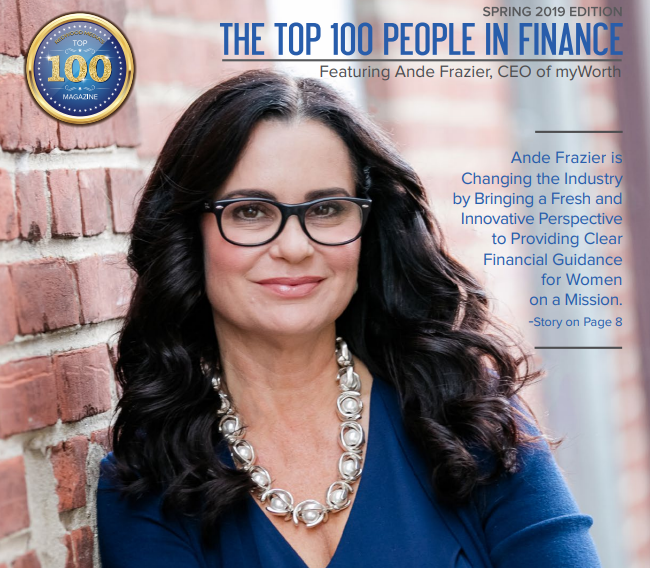
TOP 100 PEOPLE IN FINANCE

Industry Recognition

Lions Assurance Financial is a highly successful, independent business consulting and wealth management advisory firm that focuses on three key areas of the financial industry: business advisory, capital markets, and risk management. The experienced team at Lions Assurance Financial focuses on serving the business and wealth management needs of privately owned business generating 3-50 million in revenue including independent business owners, family owned businesses, and business partners. Lions Assurance Financial works with capital providers including investment banks, private equity firms, venture capital firms, capital advisory firms, accredited investor platforms, commercial banks, and speciality finance firms.​

Exeleon

Leadership & Business Feature

What is the fundamental difference between a buoyant company and a not-so-good one, when all the factors are the same?
The reply is simple- expeditious actions. It is the outcome of the ability to form an idea about the situation, find a perfect response,
and then act accordingly. And all that, without an iota of hesitation. Companies that belong to the second group are known to lack this decisiveness, which sprouts from an absence of clarity in vision or rather the faculty of processing the steps mentioned above.​

The Silicon Review

50 Smartest Companies of the Year

An effective risk management consultant will help individuals and organizations evaluate their risks and develop a plan to counter their losses. Risk management is a complex process, and there is no one-size-fits-all process that all consultants can use. However, there are certain conventional methods that a consultant will use to help you protect your organization from risk. A risk management consultant should be capable of identifying the unique risk that your business is exposed to and carefully evaluating the scenarios. One of the most critical steps in the risk management step is to discover and list all the expected and unexpected risks. There are various advisory firms that can help you mitigate risk and take care of your business’s financial aspect, but one firm that stands out from the rest is Lions Financial. The company is an independent financial services & business advisory firm based in New York. In conversation with Ariel Tavor, Managing Director of Lions Financial. Lions Assurance Financial is a highly successful, independent business consulting and wealth management advisory firm that focuses on three key areas of the financial industry: business advisory, capital markets, and risk management. The experienced team at Lions Assurance Financial focuses on serving the business and wealth management needs of privately owned business generating 3-50 million in revenue including independent business owners, family-owned businesses and business partners. Lions Assurance Financial works with capital providers including investment banks, private equity firms, venture capital firms, capital advisory firms, accredited investor platforms, commercial banks, and specialty finance firms.