
Identifying Your Replacement Property: The CRE Seller’s Guide to “Like-Kind”

Identifying Your Replacement Property: Guide to Like-Kind Requirements in a Commercial Real Estate 1031 Exchange.

Congratulations, you’ve navigated a complex market and successfully sold your commercial investment property. You’ve locked in your gains, and the proceeds are heading to escrow. But before you celebrate, your most critical decision is immediately upon you: how to protect those hard-won proceeds from a significant tax bill.

For savvy CRE investors, the answer is almost always a 1031 exchange. This powerful provision in the U.S. internal revenue code allows you to defer capital gains taxes by rolling the entire proceeds from your sale into a new, “like-kind” property.

This process is a cornerstone of strategic wealth building. However, its success hinges entirely on navigating a set of notoriously strict rules. The most important—and most widely misunderstood—of these is the “like-kind” requirement.

As an investor, you cannot afford ambiguity. This guide will demystify the “like-kind” rule, helping you avoid common pitfalls and strategically identify your replacement property with confidence.

1. The "Like-Kind" Misconception: What It Is Not

Let’s start by clearing up the single most common mistake. “Like-kind” does not mean “identical.”

You do not have to exchange an apartment building for another apartment building. You do not have to swap a 10,000-square-foot office building in Chicago for a 10,000-square-foot office building in Miami.

This misconception is dangerous. It needlessly narrows an investor’s search, adding immense pressure to the already tight 45-day identification window. The reality of the “like-kind” rule is far more flexible and strategically advantageous.

2. The True Definition: What "Like-Kind" Actually Means

The IRS definition of “like-kind” is surprisingly broad for commercial real estate. Here is the core principle:

“Like-kind” refers to the nature or character of the property, not its grade or quality.

Both your relinquished (sold) property and your replacement (acquired) property must be held for productive use in a trade or business or for investment.

That’s it.
Thanks to the Tax Cuts and Jobs Act of 2017, this rule now applies exclusively to real property. (Exchanges of personal property, like equipment or vehicles, no longer qualify).

This opens a vast array of strategic possibilities. As long as you are exchanging one investment property for another, you are likely within the “like-kind” guidelines.

Examples of “Like-Kind” Exchanges:

  • Selling a multifamily apartment complex and acquiring a single-tenant net-lease (STNL) retail property.
  • Selling raw land and acquiring an industrial warehouse.
  • Selling a downtown office building and acquiring a portfolio of medical office (MOB) properties.
  • Selling a self-storage facility and acquiring agricultural land.

The strategic implications are profound. This flexibility allows you to pivot your entire investment strategy, tax-deferred. You can move from a high-management asset (like apartments) to a passive-income asset (like a NNN-leased pharmacy) or from a high-appreciation, low-cash-flow asset (like land) to a high-cash-flow asset (like a strip mall).

3. The Other Rules You Cannot Ignore

Understanding “like-kind” is only the first step. A 1031 exchange has other rigid requirements that can easily disqualify your entire exchange if missed.

The Indisputable Timelines

 This is where most exchanges fail. The clock starts the moment you close the sale of your property.

  • The 45-Day Identification Period: You have exactly 45 calendar days to formally identify your potential replacement properties. This identification must be in writing, specific, and delivered to your Qualified Intermediary.
  • The 180-Day Closing Period: You must close on the purchase of one or more of your identified properties within 180 days of your original sale (or your tax filing deadline, whichever is earlier).

The Value Requirement

 To defer all of your capital gains, you must follow this simple rule: Trade equal or up.

  1. Net Sales Price: The total purchase price of your replacement property (or properties) must be equal to or greater than the net sales price of the property you sold.
  2. Equity and Debt: You must reinvest all your equity, and you must acquire property with equal or greater debt. If you get cash back or have less debt on the new property, it may be considered “boot” and will be taxable.

The Identification Rules

 You cannot simply submit a vague list. You must adhere to one of these three identification rules:

  1. The 3-Property Rule (Most Common): You can identify up to three properties of any value. You just need to close on at least one of them.
  2. The 200% Rule: You can identify more than three properties, if their total fair market value does not exceed 200% (double) the value of your sold property.
  3. The 95% Rule (Rare): You can identify unlimited properties, but you must acquire at least 95% of the total value of all properties you identified.

4. A Seller's Strategy: How to Identify Successfully

Trust is built on preparation. A successful 1031 exchange doesn’t start when you sell—it starts when you decide to sell.

1. Start Your Search Before You List. The 45-day window is not a “search” window; it’s a “decision” window. You should be actively analyzing markets and potential replacement properties long before your current property is even under contract. Your goal should be to have your 3-property identification list nearly finalized by the time you close.

2. Assemble Your Team First. You cannot execute a 1031 exchange alone. Your team must be in place before you close your sale.

  • Qualified Intermediary (QI): This is non-negotiable. The IRS requires a QI to hold your sale proceeds. If you take “constructive receipt” of the funds for even a second, the exchange is void.
  • CRE BrokerAn investment-focused broker (like us) can help you identify off-market opportunities and underwrite properties quickly to meet your timeline.
  • CPA & Attorney: Your tax and legal advisors are essential for confirming the exchange structure and vetting the new purchase.

3. Define Your “Why” for the Next Investment. Use the “like-kind” flexibility to your advantage. Are you selling to:

  • Increase monthly cash flow?
  • Move to a more landlord-friendly state?
  • Diversify into a different asset class (e.g., from office to industrial)?
  • Consolidate multiple properties into one, larger asset?
  • Exit a high-management property for a passive one?

Knowing your “why” will focus your search and prevent you from making a rushed, poor investment just to beat the clock.

The Bottom Line

A 1031 exchange is the single most powerful tool in a real estate investor’s tax-planning arsenal. But it is a tool that demands precision.

By understanding that “like-kind” means “investment” and by respecting the non-negotiable timelines and value rules, you can move from seller to buyer seamlessly. The key is to transform the 45-day sprint into the final lap of a race you’ve been preparing for all along.

Would you like to discuss the potential 1031 strategy for your property? We can help you analyze your current assets and explore replacement options before you list, ensuring your next move is your best move

Author

Share:

More Posts

hi_INहिन्दी
Scroll to Top
LIons Financial

Ariel Tavor

Principal

Ariel Tavor is the Founder and Principal Managing Director of Lions Financial. His agenda for Lions Financial is to provide his clients a service that maintains the highest professional value. Specializing in the Business-to-Business market has allowed proficient expertise in providing ongoing consulting services in the focus areas of business advisory, capital markets, and risk management. Ariel works with CEO’s, Capital Investment funds, and Boards of Directors where he advises his clients in matters of Executive compensation, Business Plan Design, Mergers & Acquisitions, Due Diligence, and Asset Financing.

Ariel has 10 years of experience in the financial services industry. He has worked in insurance and investment companies to analyze client’s financial and make suggestions on allocations based on defined objectives as well as maintaining long term relationships. Ariel’s comprehensive experience has allowed him to work closely with CEOs of companies and their executive teams from diverse industries such as trucking, hospitality, commercial real estate, Insurance, manufacturing, and technology. He has helped lead companies through the challenging decisions around – Buy-Sell Agreements, Deferred Compensation, Employee Group Benefits, Succession Planning, Mergers and Acquisitions, Valuations, and Business Sales.

Ariel currently oversees their family office investment group and sits on the Board of Directors of several companies and real estate developments. Their Investment group controls a portfolio of companies in multiple industries. They collaboratively have holdings in companies specialized in – Automotive Distribution- Real Estate Asset Management- Corporate Travel- Ink Mailing Manufacturing, E-Commerce, Financial Services, Management Consulting, Enterprise Technology, and Food Concepts. In recent years there has been a transition into fund allocation towards limited partnership investments in Venture Capital, Private Equity, and REITS within individual underwriting opportunities.

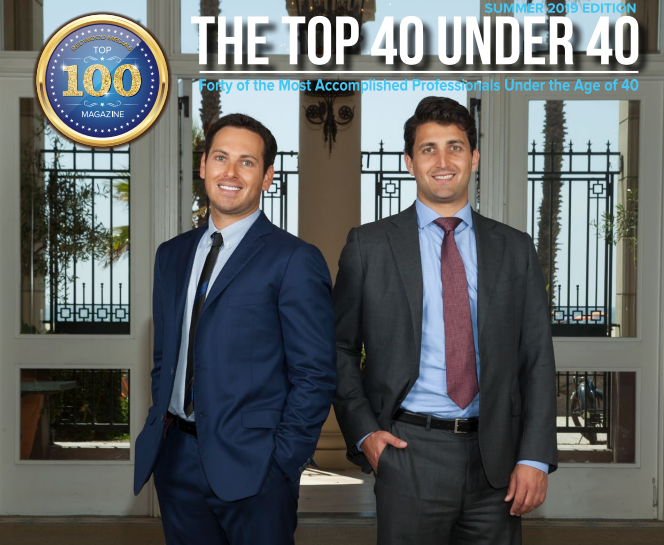
TOP 40 UNDER 40

Leadership Recognition

Ariel Tavor is the founder and principal managing director of Lions Assurance Financial. His agenda for Lions Assurance Financial is to provide his clients a service that maintains the highest professional value. Specializing in the business-to-business market has allowed proficient expertise in providing ongoing consulting services in the focus areas of business advisory, capital markets, and risk management.

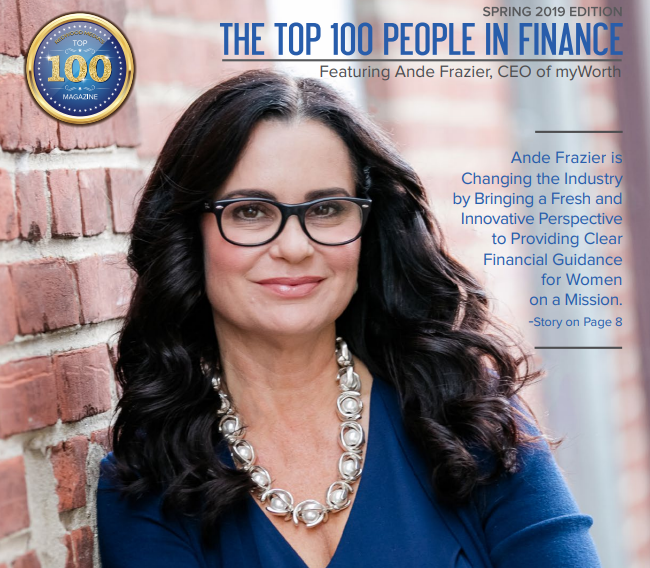
TOP 100 PEOPLE IN FINANCE

Industry Recognition

Lions Assurance Financial is a highly successful, independent business consulting and wealth management advisory firm that focuses on three key areas of the financial industry: business advisory, capital markets, and risk management. The experienced team at Lions Assurance Financial focuses on serving the business and wealth management needs of privately owned business generating 3-50 million in revenue including independent business owners, family owned businesses, and business partners. Lions Assurance Financial works with capital providers including investment banks, private equity firms, venture capital firms, capital advisory firms, accredited investor platforms, commercial banks, and speciality finance firms.​

Exeleon

Leadership & Business Feature

What is the fundamental difference between a buoyant company and a not-so-good one, when all the factors are the same?
The reply is simple- expeditious actions. It is the outcome of the ability to form an idea about the situation, find a perfect response,
and then act accordingly. And all that, without an iota of hesitation. Companies that belong to the second group are known to lack this decisiveness, which sprouts from an absence of clarity in vision or rather the faculty of processing the steps mentioned above.​

The Silicon Review

50 Smartest Companies of the Year

An effective risk management consultant will help individuals and organizations evaluate their risks and develop a plan to counter their losses. Risk management is a complex process, and there is no one-size-fits-all process that all consultants can use. However, there are certain conventional methods that a consultant will use to help you protect your organization from risk. A risk management consultant should be capable of identifying the unique risk that your business is exposed to and carefully evaluating the scenarios. One of the most critical steps in the risk management step is to discover and list all the expected and unexpected risks. There are various advisory firms that can help you mitigate risk and take care of your business’s financial aspect, but one firm that stands out from the rest is Lions Financial. The company is an independent financial services & business advisory firm based in New York. In conversation with Ariel Tavor, Managing Director of Lions Financial. Lions Assurance Financial is a highly successful, independent business consulting and wealth management advisory firm that focuses on three key areas of the financial industry: business advisory, capital markets, and risk management. The experienced team at Lions Assurance Financial focuses on serving the business and wealth management needs of privately owned business generating 3-50 million in revenue including independent business owners, family-owned businesses and business partners. Lions Assurance Financial works with capital providers including investment banks, private equity firms, venture capital firms, capital advisory firms, accredited investor platforms, commercial banks, and specialty finance firms.